Monday, 30 January 2012

What’s wrong with a transfer union?

The eurocrisis has introduced a plethora of strange words into our everyday vocabulary: ‘Contagion’, ‘technocrats’, ‘moral hazard’, ‘austerity’ and of course the derisive description, ‘transfer union’. This last term is used by those in Northern Europe who warn that bailing out the economies of Southern Europe will lead to a European Union where money steadily flows from rich states to poor states and the North loses out. Many argue that, in fact, this is what the EU has always been.

Such feelings are at the core of the German public’s resistance to the Greek bail-outs – emotions that have turned what is normally one of Europe’s most pro-EU countries into a relatively more eurosceptic place these days. “Why should we work hard just to see our money flow to lazy people in the south?” some Germans are asking.

Their resentment is fueled by charts like the interactive diagram below, found in the Guardian newspaper’s new ‘Europa’ section (a truly fantastic project with five other papers that I’m very excited about). It shows which countries are net ‘payers’ into the EU, and which are net ‘receivers’. The statistics are familiar and often brought up when people talk about the European Union – the biggest recipients of EU funds are in Southern and Eastern Europe while the biggest contributors are in Northern Europe.

Thursday, 26 January 2012

Europe’s SOPA?

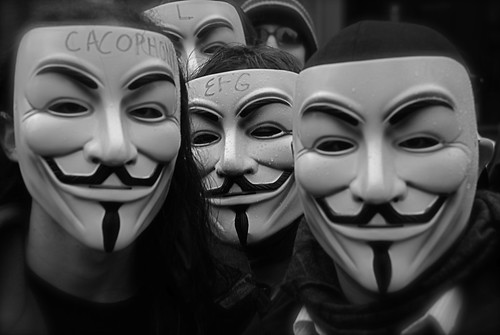
The European Parliament’s website has been shut down by hackers today, allegedly in a denial-of-service attack from Anonymous in protest of imminent anti-piracy legislation restricting internet freedom. But as the IT folks in parliament scramble to fix the problem, the functionaries are sitting around scratching their heads in confusion. Did we pass internet piracy legislation?

Their confusion is warranted. By all accounts the EU has been on the internet-freedom-lovers side during this debate. During the fallout from the Wikipedia ‘blackout’ last week, US politicians weren’t the only ones beating a path to the door to distance themselves from the now toxic SOPA legislation on internet piracy. On Friday the EU’s Digital Agenda Commissioner Neelie Kroes tweeted that she was “glad the tide is turning on #SOPA,” adding “speeding is illegal too: but you don't put speed bumps on the motorway”.

Home Affairs Commissioner Cecilia Malmström also tweeted against the US legislation, noting that ‘sopa’ in Swedish means garbage. Notably, no public statements about the US anti-piracy bills had been made before the Wikipedia blackout. It’s quite unusual for the EU to make comments about US legislation. But such was the effect of the blackout – which was, after all, global (Eurocrats felt quite helpless without Wikipedia last week!), that even politicians not involved in US lawmaking felt the need to make a statement about it.

Monday, 23 January 2012

Croatians vote to join EU

Amidst all the bad news, the EU can feel at least a bit reassured following the strong endorsement given by Croatians this weekend to their country joining the European Union. Though you'd be forgiven for getting the impression from the English-speaking media that the EU is now a toxic project that few want to be associated with, 67% of Croatians voted on Sunday to join the union.

An accession agreement was already signed by the country's government in December, and they are set to become the 28th member state at the end of this year. But the accession required a public referendum to go through. There were some rumblings of concern last year that the eurozone crisis could deliver a surprise no from the Croatian people. Brussels received a pleasant surprise last night when news came that the referendum had not only passed, it had passed by a large majority.

The vote comes a year after Estonia's decision to join the euro currency. Both decisions show that even in the midst of the eurozone crisis, the European project continues to move forward - not backward. Of course, both of these things were planned and in motion before the eurozone crisis hit. The real test may come next year when the people of Iceland vote on whether to move from their status as a pseudo-member-state in the EEA to a full member state of the EU. Opinion polls are already showing that referendum could have a hard time passing, particularly as the Icelandic economy recovers from their crisis as the eurozone slips further into its much larger crisis.

Friday, 20 January 2012

The biggest American political story Europeans haven't heard of

The US presidential primary race has attracted its usual amount of fascination here in Europe, and yesterday’s developments - with the Iowa race being re-called for Santorum and Rick Perry dropping out - were front page material. But behind the spectacle of the drawn-out US primaries, there is a far more interesting story going on in the state capitals.

Of course it’s not surprising that the European media is ignoring these huge developments at state level, because the Washington beltway media has also ignored them. They also ignored the unprecedented political revolution in 2010 that the recent events are a reaction to. While in Europe the media tends to ignore ‘federal’ (EU) politics and focus only on member state politics, in the US it is the opposite. The US media (even local state media) tends to focus on federal politics in Washington and there is little interest in what goes on in state capitals.

Thus, when the Republicans enjoyed an unprecedented victory in the 2010 midterm elections, the focus was almost entirely on the fact that they had taken control of the US House of Representatives. What was largely ignored was the fact that they had at the same time taken over state legislatures with unprecedented majorities – giving Republicans the most power in state governments they have had in decades. Republicans wrested six governorships from Democrats, giving them control of 30 of the 50 state executives. Five states saw both legislative chambers (state senate and state house) switch from Democrat to Republican majorities. In seven other states they gave themselves control of the entire legislature by picking up huge majorities in an additional chamber. The elections left Republicans controlling the entire government of half of US states, leaving them with Hungary-like majorities capable of passing whatever state legislation they like.

Wednesday, 11 January 2012

Would the EU allow a Scottish secession-accession?

Following the whirlwind events of this week, Scotland now appears to be closer to secession than it has ever been in the 300-year history of Great Britain. This week the first minister of the devolved Scottish Parliament set a date for the first referendum on Scottish independence in history. And according to polling, if the referendum were held today, Scots could very well vote to separate from the United Kingdom.

The discussion of secession has been hanging in the air for some time, ever since the secessionist Scottish National Party won a majority in the Scottish Parliament in 2007. But now with an independence referendum date set, discussion has turned for the first time toward the real practicalities of what a split would entail and the difficult questions it would present. Who does the oil in the UK's territorial North Sea waters belong to - Britain or Scotland? Who would be on the hook for the massive bailouts of Scotland's two banking giants in 2008? Would Scotland use the British pound, the euro, or a new Scottish pound?

Scottish First Minister Alex Salmond took the decision in response to a call from UK Prime Minster David Cameron to call a referendum, which the SNP had promised in their election, now. London knows that with the current economic crisis, Scots would be unlikely to be very brave at the polls. But Salmond balked, saying he would not take orders from London and setting a referendum date in 2014. 

EU complications

Though there have been a lot questions asked in the British media today about what secession would mean, as far as I can tell not a lot of thought has gone into the EU implications of all this. Everyone has been asking whether or not Scotland would choose to use the euro. But there's a leap being made there. In order to use the euro, Scotland would have to be part of the EU. That is not up to them, it is up to the 27 member states. And there are plenty of member states with good reason to block Scotland's entry.

Friday, 6 January 2012

Azerbaijan could make this an awkward year for Eurovision

It’s a new year, and of course this week everyone’s minds are on one thing – Eurovision 2012! Ok maybe not, but an interesting article in Der Speigel this week details the way in which Azerbaijan is already engaged in a public relations push ahead of their turn to host the world’s largest non-sporting television event in May of this year.

Azerbaijan will host the contest because they won last year. But there are concerns that this could be one the most problematic year in the show’s 56-year history because of the human rights record and military conflicts of the host country. Seemingly aware of this less-than-stellar reputation, the Azerbaijanis have reportedly stepped up a charm offensive in the core members of the European Broadcasting Union – Germany, France, Spain, Italy and the UK. Of course this is all part of a larger charm offensive by the oil-rich country, particularly as the Nabuco Pipeline project moves forward.

But could this year’s contest highlight the awkward relationship between the oil-hungry West and this autocratic regime? Or, as many argue, will an international event like this help to bring Azerbaijan more into line with the West and with Democratic principles? I suspect it may be the former. Even as Azerbaijan pursues its charm offensive, there are reports circulating that they are evicting Baku residents in order to build the 25,000-seat arena that will house the show this year.