Wednesday, 30 September 2009

"Das ist Deutschland Hier"

Oh SNAP! One expects this kind of thing from the French, but from the Germans??

Here is video of the new German foreign minister Guido Westerwelle admonishing a BBC reporter who asked him a question in English on Monday, snapping: "We're in Germany here."

The snippy retort has raised eyebrows in Germany and across Europe, most notably because Germany has long been one of the European countries with the least “language pride”, happy to operate in English as the ‘lingua franca’ of international diplomacy and business. Westerwelle’s comments are particularly surprising coming from a soon-to-be foreign minister, who presumably will need to use his command of English frequently when meeting with foreign dignitaries from around the world.

And incidentally, this BBC reporter was actually reporting for the World Service, which is an English language global news service that doesn't broadcast within the UK, but rather across the world to Africa, Asia, Europe and the Americas.

The French are notorious for this kind of defensive language pride. Could this be a sign that the Germans are starting to feel more confident about defending their own national identity? The BBC reporter’s question was about how German foreign policy would change with Westerwelle as foreign minister. Though he grumpily refused to directly answer the question, his rant may have revealed plenty about how Germany's foreign policy will change under his leadership. Was this a calculated signal to the international community, or a momentary bout of crankiness?

Germany is now the largest and most economically powerful country in Europe by far. Yet Germans are also renowned for their humble and realistic approach to their relative size and importance on the world stage. They have historically accepted the fact that German is not a world language and that English is the lingua franca (hence even though there are three co-equal working languages of the EU – English German and French – German is not often used in an official working capacity). This has set them apart from the French who many view as delusional about the importance of their language in the world. Germany, because of it’s WW2 legacy, has for the past half-century been very self-effacing and accommodating – particularly with English. As is often noted, 'it's not allowed to have German pride'.

Does Westerwelle’s rant signal the rebirth of a newly assertive Germany?

Gordon Brown the Populist?

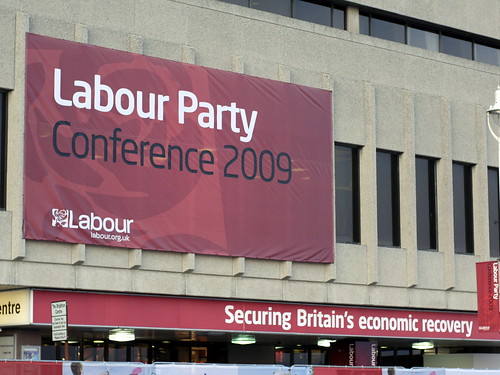
Ah party conference season in Britain. As the ocean breeze wafts in and the trains from London unload hordes of shuffling MPs, there’s always a slight whiff of desperation in these strange rituals. From an American perspective they always seem rather bizarre because they are held every September regardless of whether an election is coming up, whereas US party conventions only happen a few months before an election.

Of course this year there is a real election these conferences are preparing for, as these will be the last gatherings before the polls which should take place next April or May. The three main party conferences are all gearing up for that big showdown, and with the governing Labour party down at record low poll levels (recent polls have put them in third place behind the Liberal Democrats) it has become a natural assumption that the Conservatives will win.

In his rally-the-troops speech yesterday “Our Prime Minister Gordon Brown” basically threw the policy kitchen sink at the crowd, announcing a barrage of blatantly populist measures in a desperate bid to reverse the Labour Party’s fortunes. In the hall it seemed to work – the talk of insurrection was ended and the delegates seemed to resign themselves to the uncomfortable reality that Gordon Brown is not going to step down, and no one in the party is going to challenge him. But considering it was just a few weeks ago that Brown uttered the dreaded ‘c word’ in a speech (cuts – what were you thinking?) and said that Labour was going to have to make some difficult choices, I couldn’t help but wonder where those difficult choices were in his speech. Despite this barrage of people-friendly policies there wasn’t any indication of how any of it would be paid for.


Responding to the MPs expenses scandal, Brown said he will change the law to allow constituents to recall their elected MP – even though this doesn’t really make much sense in a parliamentary democracy. He said Labour would scrap its plans to introduce a national identity card – even though the UK is one of the only countries in Europe to not have one. Labour will increase taxation on the very top earners – even though they already did this last year. Labour will reverse the 24-hour drinking law (which allows pubs to stay open after 11pm if they purchase a special license) in certain areas - even though numerous studies have shown that an enforced 11pm cut-off encourages closing-time punch-ups and traffic accidents. And Labour will scale up efforts to target "anti-social behavior" by menacing youths - even though already those youths are now wearing the ABSOs with pride around their necks.

‘Fat cat’ businessmen will be subject to new regulation that can curb their bonuses – even though it is unclear how this could be enforced by law. Free care for pensioners (seniors) is to be extended in England, though it is unclear where the money for that will come from. And Labour will hold a referendum on whether to change the voting system from the current first-past-the-post system (as exists in the US) to a proportional representation system (as exists in continental Europe).

Free care for old people? No identity cards? Sobering up yobs in city centres? Way to make the tough decisions Gordon. Though this conference was meant to highlight the difference between Labour and the Tories, to me it seemed to only highlight a similarity – both seem to be basing their policy decisions on popular will rather than good decision-making. Granted, several of Brown’s policy announcements are good ones. But his speech was suspiciously lacking in the belt-tightening measures he said were necessary just weeks ago.

I was pleased to hear him mention the Tories dangerous Europe policy in his speech, but I wish he had gone into more detail about it as most British people don’t know anything about the Tories’ move to the fringes of the European Parliament. Of course ‘Europe’ isn’t such a crowd-pleasing word to use in British politics, so I’m surprised it got a mention at all.

The big story of the conference however was Lord Mandelson’s speech. It’s incredibly entertaining, you really should watch it. Unsurprisingly it was almost all about him, but it was remarkably engaging and animated for a British politician’s speech. In fact the general media commentary is that it was overly so, with some comparing his performance to an overdramatic drag queen in a panto show. Of course any American watching this speech would be perplexed as to why the British media is characterising it in this way, but you have to keep in mind that British politicians are not known for their engaging speaking style.


Personally I loved the Mandelson speech. It was exactly what the Labour Party needs right now – dynamism, self-confidence, pizzazz. Mandelson was a close ally of Tony Blair and is known for his cut-throat ways, accused by many of trying to convert British politics to an “American style” of personality-driven politics. His performance was so animated that, if it weren’t for his constant praise of his former enemy Gordon Brown, I would have thought he had designs on challenging Brown for the leadership himself. Watching his speech I thought to myself, “Well, why not?” He’s engaging, intelligent, charismatic – and has a breath of new ideas and experience. I’m not sure whether it’s the fact that he’s gay or his reputation for treachery that has made him calculate that he could only ever be the power behind the throne, but as Labour’s fortunes continue to decay, maybe they should just try it. But I’m not as clued in to British politics as others, is this a crazy thing to suggest?

Incidentally, I was a bit perturbed by Mandelson’s characterisation of his time in Brussels as an EU Commissioner as a banishment to the wasteland. The UK’s EU Commissioner is arguably the second-most powerful position the British have, though it may not come with the kind of fame and recognition Lord Mandelson relishes. Mandelson is a smart man and he did great work as EU Trade Commissioner. It was a bit annoying to see him toss that off as ‘lost time’ while playing to the home troops.

The conservatives’ party conference will be next, and it will be equally as important. A lot of people I know here in London are thinking about voting Tory but have many reservations about it. Lord Mandelson on Monday told the conference that Tory party leader David Cameron is just a new face on old Tory policy, a cheap sell job presenting a face of moderation that masks old Tory intentions to gut public services and reverse socially progressive legislation. Cameron needs to convince those still on the fence that the Tory party really has changed, that it really has pulled to the centre. Right now a lot of the people who say they will vote conservative in polls may not have the guts to actually do it come election time, because they still have lingering concerns about what the Tories would do.

The best thing Labour can hope for is in-fighting between difference factions of the Conservative party at next week’s conference, and it looks like they just might get it in an upcoming row over whether to hold a referendum on the Lisbon Treaty if it’s already been ratified across Europe by the time the Tories come into power. Ireland is holding its second referendum on the treaty Friday, and all polls predict that this time it will pass, completing the last hurdle for the treaty to be ratified across Europe and go into effect (barring some sabre-rattling from Czech President Vaclav Klaus).

Cameron knows that if such a referendum was held and the vote was ‘no’ (as it would probably be), it would be a violation of international law and would most likely result in Britain leaving the EU – which would spark a diplomatic and economic crisis for Britain. It’s a delicate issue, and it will be interesting to see how Cameron dances around it next week.

Monday, 28 September 2009

Return to Prague

Shiny new trams, freshly-cleaned buildings and, believe it or not, some smiling waitresses - Prague has come a long way since I lived there in 2002.

This past weekend I made a pilgrimage of sorts back to where my European adventure began. I had been to Europe before I moved to Prague to study and do an internship at Radio Free Europe in 2002 (just once on a trip to Austria and Germany with my high school band). But Prague was the first place in Europe I lived, and it was experience that changed my life. I had always been fascinated by European history, but it was in Prague that I was introduced to the possibility of living on this continent.

It was quite a setting in which to be introduced to Europe. Having survived both world wars largely undamaged, and containing a treasure-trove of OTT counter-reformation architectural delights, it’s truly a stunning city. To be sure, the oft-levelled criticism that the refab following the Velvet Revolution have turned the city into a fairy tale Disney World are fair. At times the city centre does seem a little too much like a contrived veneer set up for tourists. But as opposed to other such cities which get that description such as Venice or Florence, Prague is also a living, functioning capital city. And its fascinating history is not limited to the fairy tale buildings of Stare Mesto and Hradchany, it is also a living museum of sorts to the communist era.

That is really what I found so thrilling about living in Prague. The city has gone through so many distinct periods – from early success as an independent medieval kingdom, to various control by German Luxembourg and Habsburg dynasties, a hotbed of the reformation, the centre of production for the Austo-Hungarian empire, 40 dark years under Communist rule, and finally to a member state of the EU. All of this history is reflected in the city’s architecture and layout, not too mention in the unique personality of its inhabitants.

Of course, these impressions were all shaped back in 2002, when the country was not yet in the EU and still very much in transition. It’s still a society in transition to be sure, but the city felt quite different this time around. But perhaps it’s me that’s changed more than Prague. Living in the UK I’ve become well aware that Prague has turned into one of those cities where Brits go to get drunk for cheap, often in the form of stag and hen dos (Bachelor and Bachelorette parties). I was a bit concerned that seeing British tourists peeing and vomiting all over everything might take away some of the magic in my memory of Prague!

To be sure there were plenty of groups of drunk Brits stumbling about, but the most unavoidable tourists were Americans. They were literally everywhere, so much so that after awhile I started to feel like I could have been walking around in Boston. Unlike the British tourists, the Americans were perfectly well behaved and nice enough. Still, it’s not so nice to hear that nasal, loud accent everywhere. I began to wonder if it had been like that when I lived there and I just hadn’t noticed, because I hadn’t yet come to view hearing American accents as hearing something obtrusive or ‘foreign’.

Czesky Changes

Whether or not the hordes of Americans were there back in 2002, there were plenty of things that have changed since then. The most startling was seeing my old place of employment, Radio Free Europe, turned into a museum. Back in 2002 it was housed in the old Czechoslovak federal assembly building (which had closed in ’93 after there was no longer a Czech-Slovak federation to assemble) located next to the National Museum on Wenceslas Square (pictured left).

RFE is a radio broadcaster set up during the Cold War by the United States congress in order to broadcast programming into Eastern Europe. Listening to the broadcasts was often a criminal offense back then. After the cold war ended RFE began gradually closing its Eastern European stations and opening new ones in the Middle East and Central Asia. After 9/11, the US government decided that the building needed a huge cordon of security around it, because it was broadcasting into the middle east. So the traffic flow at the top of Wenceslas Square was severely disrupted as all the roads around it were closed off. To get into the building I had to go through an elaborate system of security checks at 4 different points!

Because of the chaos this was creating RFE had to move out, and today the area around the building is completely opened up and a museum about the federal assembley is now housed inside. What a strange feeling, being able to see the desk you used to work at being shown to you on a guided museum tour.

Down at Old Town Square I came across a thoroughly nauseating change that’s taken place below the NYU in Prague building, where I went to school. There right below it was a new Hard Rock CafĂ©, screaming out in all its tacky glory (pictured). I really hope NYU kids aren’t going there all the time. Really, how horrid!

Blocked by Floods and Popes

I first arrived in Prague in September of 2002, just after the worst floods in the country’s history swelled the Vltava across vast swathes of the city. I stepped off the plane into what was still a disaster area. The metro had been flooded, streets had been ripped apart, and cultural institutions like the Rudolfinium were in ruin. It all added to the learning experience really, it was incredibly interesting to watch as the city slowly recovered and rebuilt.

But unfortunately Prague’s very efficient and comprehensive metro system was shut down almost the entire time I lived there, and I never ended up taking it. So I was excited to finally use it this time around. It’s a really great system, and it made it so much easier to get around rather than having to use the tram to get everywhere. Still, I guess travelling by tram is nicer because you can get a better feel for the layout of the city, plus it’s much more old-timey!

However our transportation wasn’t completely unfettered, as this time around it was the pope rather than rising flood waters which blocked my path. The pontiff happened to be making an official visit to the Czech Republic while we were there, closing off sections of the city as he moved around. The castle was effectively closed the whole weekend because the pope was there addressing Czech politicians. This video of a spider crawling around his robes while he spoke to them has been circulating across the internets.


The stated purpose of his visit was to bring the largely atheist Czechs back to the fold of Catholicism. The Czech Republic is the most atheistic country in Europe, with 60% identifying as Atheist or Agnostic and few regular church attenders. In his speech to the politicians the pope blamed the communist government for this current state of affairs, recounting how they closed churches and arrested priests. But it’s quite a stretch to say that Czech atheism is entirely the result of just 40 years of Communist suppression, particularly when the Czech Republic’s fellow post-communist neighbour, Poland, is the most religious country in Europe. The reality is that it was the Catholic church itself which engendered this disgust with religion in the Czech people, coming down brutally and severely against the country’s attempts to switch to protestantism during the Hussite and 30 Years wars.

The counter-reformation came with a fierce and imposing blow, the leaders of the Hussite protestant religion were executed by the Catholic Habsburgs and grand building projects were instituted throughout Prague in order to show the Czechs who was boss and intimidate them into nominally returning to Catholicism. In fact, that is why Prague is such a beautiful city, because this massive building project was undertaken after the 30-years war to win back the Czech people. They nominally returned to Catholicism but it never really took, and their enthusiasm for the religion was sufficiently low that when the communists came in and suppressed the church, few people complained. Even now it was evidence how little impact religion has in this country, as there were no picture of the pope around the city or cheering crowds anywhere to be seen. Indeed, everyone seemed to be either indifferent to or unaware of his visit.

It was notable too that even St. Vitus Cathedral he celebrated mass in is still owned by the Czech governmentand is operated as a museum, not as a place of worship. The Catholic Church has been trying for years to get the most important Czech cathedral back but has so far been unable to do so.

The Rudeness Thing

One consistent observation from Western tourists about Czechs is the almost unbelievable rudeness of service staff. I’ve always thought this was rather unfair to the Czech Republic, as this is a trait common to all the post-communist countries of Eastern Europe. Prague just happens to be the most visited city in that region. But it is true, ideas about customer service vary differently between Western and Eastern Europe.

While there this weekend I noticed perhaps a slight improvement in customer service, but there were still plenty of almost comically unfriendly staff interactions. One thing that does seem to be unique to the Czechs is that their unfriendly interactions with strangers, be it in the context of customer service or not, seem to be tinged with an explosive and inexplicable rage.

For instance, as we were visiting the Loretto monastery in Hradchany, we entered about ten minutes before they were closing for a lunch break. We were still in the courtyard when they wanted to close it up, but there were still plenty of people milling about. A staff woman yelled at me from across the courtyard that we had to leave, but her directions on where to go were confusing and I was unclear on what she wanted me to do, come toward her or go along the ropes. My hesitation seemed to infuriate her, she became flustered and belted out with exasperated rage ‘You must leave!!”

The British person I was with was confused by the interaction, but I recalled from living in Prague that I encountered this kind of thing a lot. Once I was quietly humming to myself while riding the tram and listening to my discman, and a woman of about 35 came over and said something to me in Czech. I removed my headphones and told her I don’t speak Czech, and she glared at my icily. She then spat out, literally almost quaking with fury, “Stop…singing.”

I have no idea where this bizarre rage in customer service comes from, but I would be interested to hear any theories from Czechs! I did notice that it’s perhaps gotten a little better, in that we did encounter a few service people who were nice, and one waitress who even smiled!

For the most part all my old haunts were still there: Radost, Chapeau Rouge, Roxy. But I did notice that the gay scene in Prague has changed dramatically. When I was living there there were lots of gay bars and clubs but they were mostly underground, with doorbells to get in. The most popular bar, Friends, was down in a dank cellar. Now Friends has moved down the street in a very open bar with big windows. The biggest club, now renamed Valentino’s, has undergone such a transformation that it barely resembles its former self. That was really interesting to see.

It did take a bit of the edge out of the experience, I no longer felt like I was at some kind of dangerous periphery of Europe. But as the Czech Republic becomes more integrated into the EU and Western Europe, it was bound to happen. It’s still an amazing city and I’ll always look back at my time there with affection. But seeing the city this weekend with my new ‘Europeanised’ eyes, Prague became more of a real city rather than an ‘idea’ in my head. And that’s really what I wanted, to integrate my experience in Prague with my current life in Europe. It might not be as edgy or as adventurous, but Europe has become home now. And I’m glad that I now feel like Prague is part of that.

Wednesday, 23 September 2009

Angry Europeans and Embarrassed Americans in New York

There's no doubt about it, this week's UN climate change meeting in New York has been a humbling experience for America. Being shown up by China in the field of environmental protection isn't exactly a shining moment for the US, but it may be a harbinger of the century to come.

European diplomats at the summit are reportedly seething at US inaction, and their reaction to Obama's almost completely substanceless speech yesterday was nothing short of incredulity. But with the climate bill stalled in the US senate and the healthcare fight likely to push it off the agenda until after the hugely important Copenhagen summit in December, Obama's hands are tied. With no climate bill passed by December, the US will likely not be able to commit to the post-Kyoto framework being worked out at the December summit, considered by Europe to be the "last chance" to save the world from the effects of climate change. Though just a year ago it was thought India and China would be the biggest obstructionists to reaching a global agreement, this week it has become clear: the US may be the lone force standing in the way of fighting climate change.

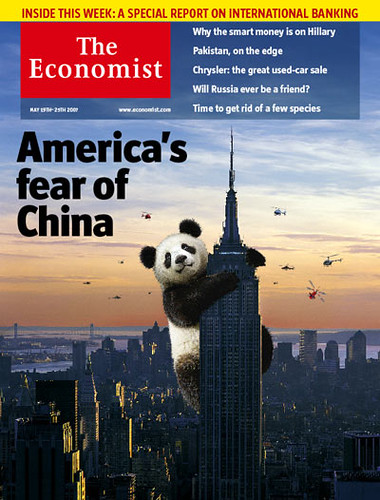
China, on the other hand, unveiled some big commitments this week. Yesterday China's President Hu committed China to getting 15% of its power from non-fossil sources by 2020, planting enough forest to cover an area the size of Norway and limiting the growth of carbon emissions as a percentage of the country's gross domestic product. I'm also hearing word that today at 2pm there will be an announcement at the New York Stock Exchange that China will launch a carbon valuation system called the "Panda Standard", where companies have a certain carbon allowance and can buy or sell credits as they need to. I've even heard that this announcement later today by China may be followed by an announcement setting up a Chinese cap and trade system like Europe's Emissions Trading Scheme (ETS). I would be truly shocked if they do announce that, but if they do it would be hugely embarrassing for the US, which still has no cap and trade system or even a voluntary standard.

Once the Chinese government became convinced of the reality of climate change about a year ago, they have acted dramatically and rapidly with new environmental measures that now put them ahead of the US in several ways. They’ve restructured their development plans to cut down on high-emissions projects, and within two years they have phased out 54 million kw of coal-fired power capacity by small polluting power plants. Last year the issued new rules on the construction sector for the use of renewable products. They’ve poured money into the development of public transport and the promotion of environmentally-friendly vehicles. Also last year the government ordered retailers to stop providing free plastic shopping bags. China now has the world’s largest hydropower generating capacity and is currently the fourth largest wind power producer after the United States, Germany and Spain – and it’s catching up quickly. Last year renewable energy accounted for about nine percent of the country's energy total, surpassing the US.

Of course, with a top-down command economy China can afford to do these things at this speed. As Thomas Friedman has lamented, if only the US could be "China for a day". But no matter how they've attained these rapid results, the Chinese are putting the Americans to shame.

Needless to say with all the hope that was placed in Obama by Europeans, this has been a disappointing day across the pond. Newspapers over here have been questioning Obama's ability to deliver on climate change, with one particularly scathing article from the Guardian called 'Obama the Impotent' making the email rounds. The Guardian writes:
"On the campaign trail, Barack Obama promised to reverse the Bush administration's terrible ecological record. Yet so far the world has seen more symbolic gestures from the Obama administration than accomplishments. Its biggest achievement so far has been a disappointment. President Obama signed an executive order to increase US motor vehicle mileage standards – but only to a level that will push fuel efficiency by 2020 to a level that European and Japanese cars reached several years ago, and even China has already achieved."
However one consistent theme has been that the European papers are not blaming Obama himself for the inaction, but rather the government system he has the misfortune of having to lead. Writes the Guardian:
"Thwarting Obama on a regular basis is an unrepresentative senate where "minority rule" prevails and undermines what a majority of the country may want. With two senators elected per state, regardless of population, California with more than 35 million people has the same number of senators as Wyoming with just half a million residents. This constitutional arrangement greatly favours low population states, many of which tend to be conservative, producing what one political analyst has called "a weighted vote for small-town whites in pickup trucks with gun racks."
It should be no surprise that China is beginning to surpass the United States in several ways, after all this is slated to be the "China century," which will see a return to a two-superpower world with the US and China competing for power. But the fact that China is now surpassing the US in the fight against climate change should be a big wake-up call to Americans, especially liberals.

Monday, 21 September 2009

Bankers Beware: Brussels to Reveal Pan-EU Regulator

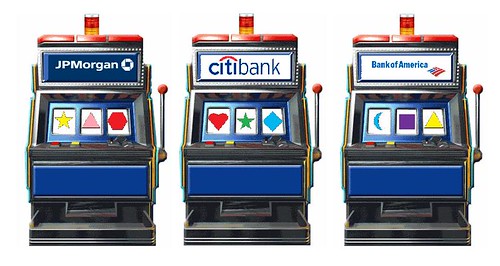
One year after the meteoric collapse of Lehman Brothers, both Washington and Brussels are preparing to unveil massive regulation overhauls that, if they come to pass, will have the extraordinary effect of putting the world’s entire financial system under the thumb of two powerful – and competing - regulatory regimes.

So far both America and Europe have failed to institute meaningful reform to the financial system that would prevent a similar financial collapse from happening again. This was almost painfully evident during President Obama’s stern speech to Wall Street last week on the one-year anniversary – full of tough words but backed by little action taken in the past year to better regulate American financial institutions.

This reality was angrily pointed out by some American commentators, who said that a regulatory overhaul should have been made central to the massive bail-outs a year ago. The Obama administration counters that regulatory reform at the height of the crisis would have destabilized a system already on the verge of collapse. This situation has been mirrored across the pond, where both national governments and the EU have resisted making significant regulatory reform so far.

But now it is clear that the financial sector is once again on stable ground. Whether this is a direct result of the massive cash infusion it was given over the past year is debatable, but given the windfall profits and massive bonuses that have begun to creep back in, it’s no longer tenable to argue that the sector is too fragile to introduce massive reform. It appears the Obama administration is set to introduce its overhaul in the coming weeks. Across the pond, it appears some consensus has finally been reached in order to create financial regulation at the EU level. If the plans come to pass it would mean that just two centralized, powerful regulatory regimes would govern basically the entire world’s financial sector, which would mean that the laissez-faire days of Anglo-Saxon capitalism are a thing of the past.

The EU proposal that will be unveiled on Wednesday will reportedly create three new supervisory authorities in the areas of banking, insurance and securities. The new authorities would supervise financial institutions and step in during emergency situations to take urgent action. They will reportedly have the power to shut down Europe’s stock markets during a crisis. The new authorities would also be able to rule on disputes involving financial institutions that operate across EU internal borders. For large recapitalisations or bail-outs, the decision would come directly from the European Commission by a simple majority vote of commissioners.

The UK has been the biggest objector during these negotiations, but reportedly they have been satisfied with a compromise deal that would require that member states be allowed invoke a clause taking that voting decision instead to the council, to be voted on by member states’ finance ministers, by a qualified majority vote.

Eventually the authorities will draw up themselves technical standards to be applied throughout the EU, which all EU and EEA financial institutions would be required to follow. The commission would then have to approve these standards. The purpose of this standardisation is to make sure everyone is playing by the same rulebook and that companies no longer have to spend millions on compliance efforts across different regulatory regimes in Europe.

A separate European Systemic Risk Board will also be created, according to EUObserver. That board would watch the financial system for risks or problems, and it can issue warnings early when it identifies problems.

Significant details of the Obama administrations plans for a regulatory overhaul have not yet emerged, but if they are as ambitious as these Brussels plans, the world could be looking at a very different regulatory environment in the near future.

Thursday, 17 September 2009

Obama Throws the Russians a Bone

In a major foreign policy move, President Obama announced today he is abandoning the Bush Administration's missile defence system plan for Eastern Europe. The plan, which would have seen long-range missiles installed in Poland and a radar system in the Czech Republic, had infuriated Russia, who saw it as a direct threat. The Bush administration had always insisted it was not meant to threaten Russia but rather to defend Europe from rogue states like Iran, but this seemed dubious to the Russians considering that the missiles themselves would have been pointed at Russia, been far more powerful than needed to take out the small-arms capability of Iran, and were to be placed just a few miles away from Russia’s border.

Obama said today that after a thorough review of the program he had decided that a more “cost-effective" system using land- and sea-based interceptors would be better suited to Iran's short- and medium-range missile threat. Though the administration stressed that this decision is “not about Russia”, the reality is that it largely is, and that’s not necessarily a bad thing. While it is true that the system Bush planned to install seemed geared more for the Cold War than for the realities of modern dangers, it is also true that it was proving to be a huge obstacle in US-Russian relations. Considering that those relations are in desperate need of improvement in order to have a peaceful world, dismantling this plan could be good for America’s security in more ways than one.

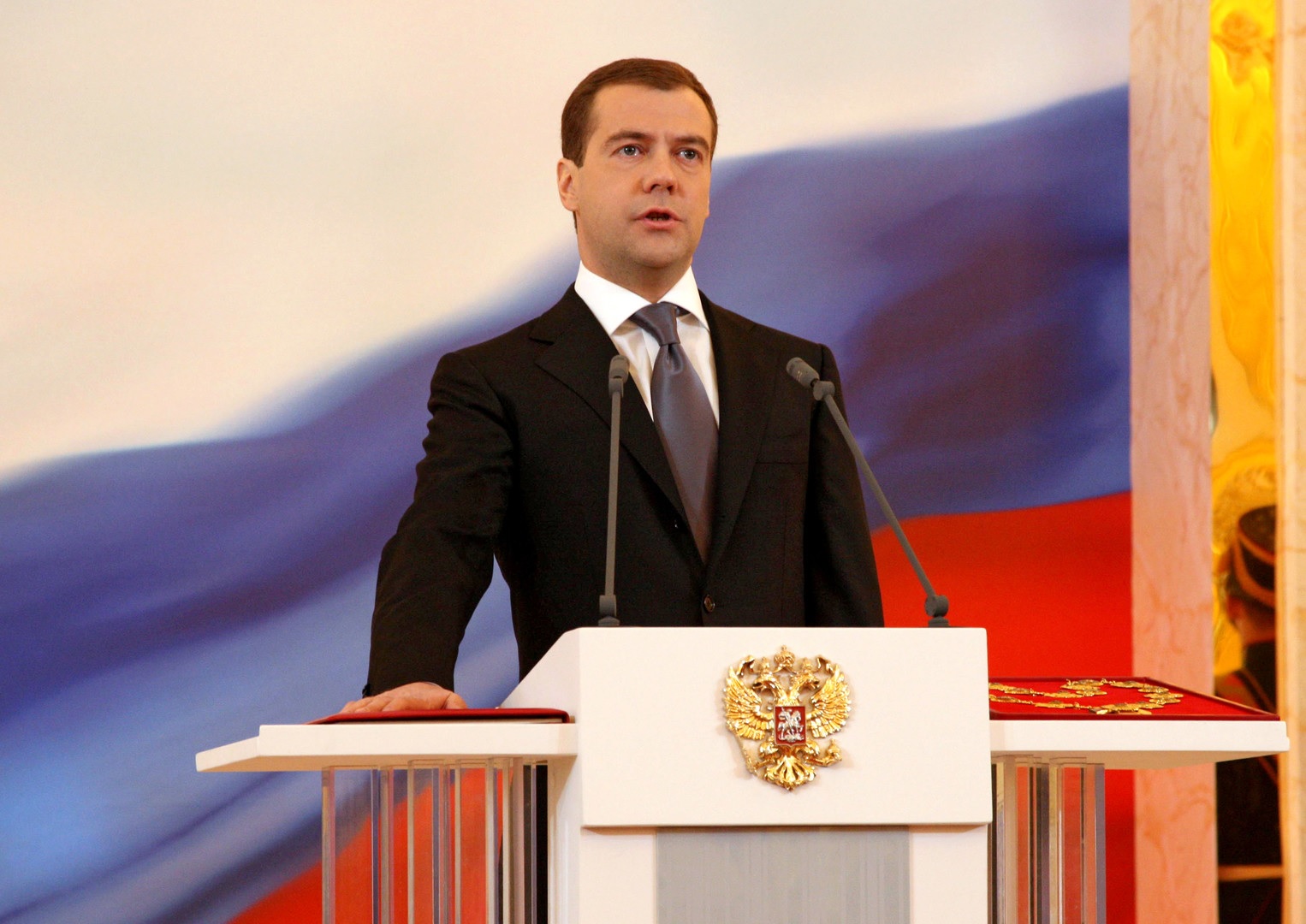
Shortly after Obama was elected Russia had made a bold move showing that they were serious about their objections to the missile system. President Dmitry Medvedev delivered a speech the day after the historic election saying that if the missile shield were installed Russia would install short-range missiles just off the Polish border in its territory of Kaliningrad, in response to the US "provocation." All indications were that they were serious about this threat, and the resulting tit-for-tat could have resulted in a missile defence arms race that no one wants to see.

Reaction from the American right was predictable, decrying Obama for “selling out” American allies (the narrative for the right seems to be that he is a lilly-livered coward abroad while being some kind of Hitler like tyrant at home). But reaction from the international community, and from Russia in particular, reflected a collective sigh of relief. Russia's ambassador to NATO called it a “breakthrough" for US-Russian relations, saying that with this obstacle removed the two countries could move ahead with talks about reducing their nuclear weapons stockpiles. NATO Secretary-General Anders Fogh Rasmussen said it was "a positive step", reflecting the fact that few in Europe were excited about this system which was ostensibly meant to protect them. The missile defence system, after all, was going to outside the scope of NATO and completely US-controlled.

And the conservative governments of Poland and the Czech Republic who had agreed these deals with the Bush Administration, although surely disappointed, were muted in their reaction. The Czech public on the other hand have expressed elation today, as the plan was very unpopular there. The Poles were more mixed in how they felt about the plan, but my Polish friend tells me the media reaction there so far hasn't been too dramatic.

So was this a big concession to Russia? As the title suggests, it was a 'bone', an easy gesture to make considering it wasn't in US defense interest to have it anyway. Essentially no one, including the US military, thought the missile defense system made any sense except the American and Polish right-wing. Iran does not have the capability to deploy or make long-range missiles, and it's never been proven that these systems being installed actually work. As Joe Cirincione told MSNBC last night, the Bush Administration was installing "a technology that doesn't work against a threat that doesn't exist".

Of course the missile defence system has just been one aspect of American foreign policy that Russia has seen as a provocation by the US. They've also seen US invitations to the nations of the caucasus and Central Asia to join NATO as an anti-Russian provocation. It's doubtful Obama will recognise the "Soviet sphere of influence" Russia is trying to claim, nor will he rule out the possibility of these nations joining. But he is unlikely to persue the NATO-expanding policy with the same irresponsible gusto that the Bush Administration did. That gusto was largely to blame for the Georgian War, an entirely avoidable conflict brought on by Georgia misinterpreting Bush's neocon rhetoric for actual promises of future military assistance.

So it seems as if everyone is happy with this announcement except the American Neo Conservatives. And as the never-confirmed limited-term ex-UN ambassador John Bolton makes the rounds today describing this as “a concession to the Russians with absolutely nothing in return” (I’ve never seen anyone get so much media exposure for themselves out of such a limited public career) you have to wonder what decade he’s living in. Altering this plan will result in a more cooperative Russia and probably in the long run a more logical defence capability for the United States.