The European leaders are exiting the Just Lips building now, and they are all smiles. To hear them tell it, everybody got what they wanted out of yesteray's horse-trading in the Autumn European Council. Merkel and Sarkozy got their eurozone treaty changes and David Cameron got his budget freeze. The British media sure seems to have swallowed Downing Street's line that Cameron was "successfull" in convincing 10 other member states to back him on his call for a cap at 2.9% for an EU budget increase. Hooray hurrah!
Er, but wait a minute...wasn't it a complete budget freeze that Cameron was asking for? The British media seem to have forgotten that between yesterday and today. In fact, Cameron's freeze proposal was roundly rejected by member states yesterday, so he then fell back to a position of wanting to keep the budget increase to the commission's proposed 2.9%. To claim that this was a "victory" for Cameron is pretty absurd, considering a 2.9% increase was the stated position of most member states going into the meeting. The 6% increase requested by the European Parliament was never a realistic figure - every year they request more than they expect to get in order to increase their bargaining position with the council. Yes, member states agreed not to negotiate to any figure above 2.9%, which will surely displease the parliament, but the other 10 member states certainly didn't need much "convincing" from Cameron to agree to this position.
Friday, 29 October 2010
EU just wants a little love
Let's face it, these days the EU is just not very popular with the European public. Gone are the heady days in the early 2000's when there was boundless and perhaps unrealistic ambition in Brussels for what the EU could accomplish. Today, as the financial crisis bites and people's confidence in the common market has been damaged, one of the EU's biggest problems is how to win the love of its public.
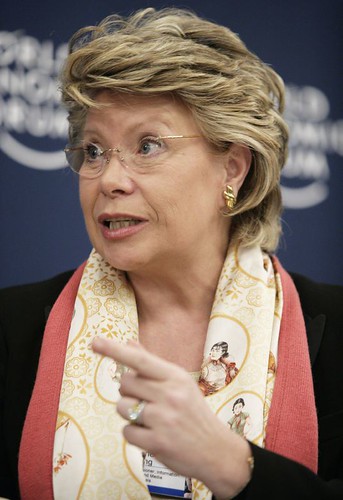
This week Justice and Citizenship Commissioner Vivane Reding and Internal Market Commissioner Michel Barnier unveiled a new bundle of consumer protection mesures, and the main message seemed to be, "Please, love us!" But Reding seems determined that this raft of new rules, coupled with the introduction of a new 'Single Market Act', will be accompanied by an assertive communication campaign that will try to make sure EU citizens know that these new benefits and protections are coming from Brussels.
Thursday, 28 October 2010
A day of deal-making in Brussels
As European leaders meet in Brussels today everyone seems to have something to sell. David Cameron and new Dutch prime minister Mark Rutte have stepped off their trains this morning with demands for an EU budget freeze for 2011. Angela Merkel and Nicolas Sarkozy arrived this morning having formed a pact between them a few days ago to jointly demand treaty changes allowing the EU to sanction eurozone countries who misbehave. And representatives of the European Parliament will be on hand to demand the introduction of direct EU taxation that would go directly to Brussels. It will be an intense day of horse-trading as each block tries to get what they want.
The British and Dutch conservatives want to freeze next year's budget at 2010 levels, opposing the 6% increase approved by the parliament last week. They say it would be obscene to increase the EU budget, which is financed by member states, at a time when national governments are pursuing drastic budget-cutting measures. Members of the European Parliament (MEPs), on the other hand, point out that a 6% increase is significantly lower than what they usually call for. But they say they would be willing to consider a freeze if the member states agree to new forms of direct EU taxation on things like aviation, financial trading and carbon credits. Right now the EU is entirely funded by member state governments.
Tuesday, 26 October 2010
EU considers closer ties with Cuba
In one of her first moves after the EU's foreign relations arm (the EEAS) comes into existence at the begining of December, the new EU foreign affairs chief Cathy Ashton is going to contact the Cuban government to explore closer ties with Havana, according to news reports today. The development is interesting because it shows how the new EU foreign policy, made possible by the adoption of the Lisbon Treaty, may seek in some ways to be a counterweight to American foreign policy. But there are deep divisions within the union about whether it should seek a different policy toward Cuba than the United States.
The EU has in fact had a "common position" on Cuba since 1996, but this policy has been seen by some as a NATO-crafted backing of the American position on Cuba. It says that EU member states will only normalise their links to Cuba if the country makes progress on democracy and human rights. Spain has been the leading voice for increasing ties with Cuba, and over the summer they were keen to highlight to Brussels Cuba's decision to release 52 political prisoners. According to reports, these pleas from Spain have found a sympathetic ear with Ashton.
Wednesday, 20 October 2010
UK cuts 1/5 of government spending - is it possible in the US?
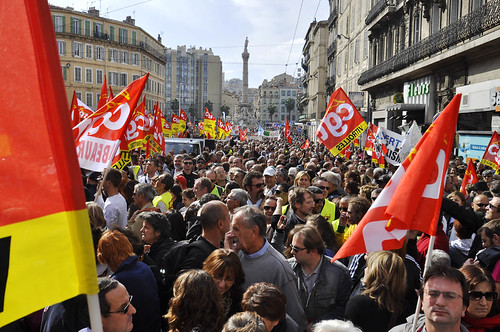
As rolling strikes and violent protests against austerity measures continue to cause chaos in France today, across the channel the new conservative government of David Cameron introduced their much-anticipated package of budget cuts, the biggest slash to the UK budget since World War II. Naturally, the stoic British public is not reacting in the same 'take to the streets' manner of the French in their reaction to Sarkozy's attempts at budget cuts. Instead, there seems to be a sense of profound sadness and anxiety in the UK today.
Put quite simply, the cuts are massive. £83 billion ($130 billion) in cuts were announced this afternoon, an average of 20% out of every government department. 490,000 government employees will lose their jobs. Government offices in London will be cut by a third. Rent will be increased for people in public housing, police services will be cut, local town councils will get less money, and prisons will have less space. The retirement age will be raised to 66 (compared to 62 in the US). Both the sales and income tax will rise, with most of the increases coming out of the salaries of top earners. University teaching budgets will be cut by 75%, meaning the cost of tuition will rise considerably. And the British military isn't immune either, it will see an 8% cut in its budget. Even the queen will have to make do with less. Cameron is giving her a 14% pay cut.
Wednesday, 13 October 2010
The real tea party
The other day I was at a conference here in Brussels and one of the speakers, who was German, made a joke about America's tea party movement. Making the case that European consumers would not like paying extra taxes in order to pay for recycling, he joked, 'but in the United States I understand they have the tea party to take care of this kind of thing'. The audience laughed, and I laughed as well, because I assumed it was said tongue in cheek. But then when I thought about it I realised, wait, maybe he's serious...
I wouldn't blame Europeans for thinking the American tea party movement is motivated solely by their opposition to taxes, after all this is how its portrayed in the European media - particularly by the British press. And they in turn are taking their cues from the American mainstream media, who have also been portraying it as a movement of libertarian fiscal conservatives concerned about deficit spending and taxes. But even as this narrative continues, there is clear and unavoidable evidence that this is not what the movement is mainly about at all. In fact the movement has no real focus, serving mostly as a confused jumble of rage. Its participants – who show up to street demonstrations and rallies wearing funny hats and revolutionary war costumes - appear to have various grievances, and some seem to have no specific grievances in particular. But one thing is clear – the leaders of the tea party movement, and the candidates they have elected to represent the Republican Party in November's midterm election, are the same old social conservative culture warriors that have been around for years. Only this time, they're wearing funny hats.
Subscribe to:
Comments (Atom)