Monday, 24 September 2012

Britain snubs Europe, goes to the dance with Canada


It shouldn’t be a surprise to anyone that UK foreign secretary William Hague has found a new way to annoy his European counterparts. But today he’s managed to bring a North American country into the fray, and for once is isn’t the one with whom he believes he has a “special relationship”.

During a visit to Canada today Hague announced that the UK is going to close some British embassies across the world and merge them with Canadian embassies. The two countries will establish joint diplomatic missions, sharing embassy offices and consular services.

The move, an attempt to save money in these cost-cutting times, might seem logical enough at first glance. But the more you delve into it the more you realize it is diplomatically and logistically bizarre. While the UK and Canada may have similar foreign policy (something irrelevant to the consular services they are merging), they are completely separate countries which share no unified visa system. The only thing they share is a queen.

Friday, 14 September 2012

EU citizens embrace the eurobots

Citizens of the European Union may have lost faith in their leaders, but they have not lost faith in robots. This according to a reassuring press release put out today by the European Commission, which boldly declares, “More than two-thirds of EU citizens (70%) have a positive view of robots.”

In fact Europeans are apparently ecstatic about these automatons, particularly those who have already had some personal experience with a robot. According to a survey conducted by the EU, 26% of Europeans would be comfortable with having a robot walk their dog. Bulgarians seem to especially love the robots, with 21% of them saying they would even trust the robots to look after their children or elderly parents.

But not all Europeans are willing to embrace the robots. The Greeks do not like these robots, not one bit. 46% of Greeks say they do not like robots, making it the most anti-robot country in the EU. Greek Cypriots are as wary as their mainland cousins, with 98% of them saying the robots need to be “carefully managed”.

Wednesday, 12 September 2012

The peril and promise of a new treaty

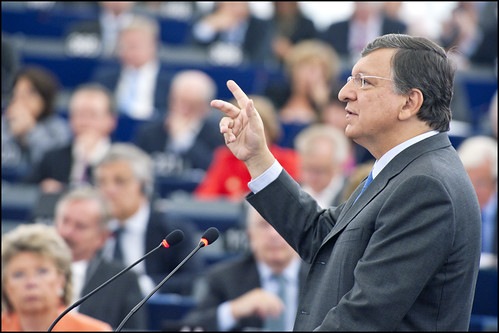
European Commission president Jose Manuel Barroso dared to use the ‘F word’ in his state of the union address here in Strasbourg today – federalism.

“Let’s not be afraid of the word, we will need to move towards a federation of nation states,” he told the European Parliament. “Today, I call for a federation of nation states. Not a superstate.” This federation, he continued, will ultimately require a new treaty, as German Chancellor Angela Merkel had suggested last week. EU leaders, still traumatized by the painful experience of ratifying the Lisbon Treaty in the last decade, have been desperate to avoid this.

“Before the next European Parliament elections in 2014, the Commission will present its outline for the shape of the future European Union. And we will put forward explicit ideas for treaty change in time for a debate.”

Barroso has been hesitant to use the word federal in the past when describing the future direction of the European Union, aware of the images of a power-grab it can conjure up in member states. But in his state of the union addresses, a yearly tradition itself created by the Lisbon Treaty, Barroso has been keen to make the European Parliament happy. He clearly thought that by finally using the F-word, he could do it.

Monday, 3 September 2012

A long-distance relationship

There are many clichés used to describe Iceland’s position in the middle of the Atlantic. Torn between Europe and North America – quite literally sitting on the fault line separating the two continents geologically – the country’s location is the most frequently used metaphor. This has been particularly true now that the country is in the process of EU accession.

While in Iceland over the past four days – a stopover on my way back to Brussels from a visit home to New York – the question of EU accession was very much on my mind. In fact I made it a point to ask every Icelander I met how they plan to vote in the coming referendum (what can I say, I’m tons of fun at a party). I planned to write some kind of blog entry on the way back reflecting people’s opinions and concerns, and here I am on the plane writing it.

It’s tempting to start trying to explain Iceland’s reluctance to embrace Europe with an anecdote about geography, since it is so far the European mainland. I could describe the intense sense of isolation I felt while out in the uninhabited lava fields away from Reykjavik. Or I could muse about the feeling of being torn in two directions which I felt while standing in the gorge separating the two continents at Pingvellier Park.

Thursday, 16 August 2012

One car, one vote

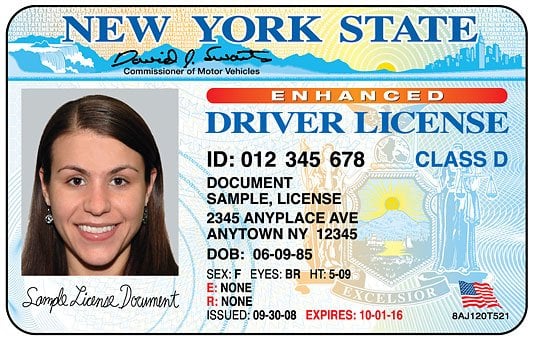
The US presidential campaign switched into high gear this week with Mitt Romney’s selection of Wisconsin congressman Paul Ryan as a running mate. But with a raft of voter ID laws now going into effect in crucial swing states across the country, it’s looking increasingly likely that the result in November could be shaped more by who is allowed to vote than by who is on the ticket. Thanks to these new laws, if an American doesn’t drive, he or she may not get to vote.

Until 2003, no state in America required voters to show a photo ID in order to vote. For Europeans this may seem strange, since showing your national ID is often a requirement here for things as simple as using a solarium. But English-speaking countries tend to not have national IDs. For some reason I’ve never understood, there’s just some deep-rooted Anglo-Saxon distrust of them.

In the United States, this leaves drivers licenses as the only government-issued photo identification most people have. Because such a large proportion of adult Americans (85%) have a drivers license, this has more or less worked out. Many people obtain a drivers license even if they do not routinely drive, in order to have a photo ID.

But that leaves 10% of eligible American voters who do not have a drivers license or any other form of photo ID, according to NYU's Brennen Center for Social Justice. This group is overwhelmingly made up of African-Americans, Hispanics and college students. And these three groups are statistically the most likely to vote Democratic.

Wednesday, 8 August 2012

Bank battle: New York vs London

Yesterday's news that US regulators are investigating yet another British bank for illegal activity has provoked a roar of indignation and incredulity from the City of London. Today a member of the British parliament accused the US government of launching the string of investigations in order to weaken the British banking sector.

“I think it's a concerted effort that's been organised at the top of the US government,” fumed Labour MP John Mann to British media. “I think this is Washington trying to win a commercial battle to have trading from London shifted to New York.”

This week the New York State regulator charged the British bank Standard Chartered of money laundering $250 billion in funds aimed for Iran. The US has a trade embargo against Iran, and under US law all companies publicly traded in the US, including Standard Chartered, must comply. The money laundering went on for nearly a decade, the regulator alleges.

The announcement comes just weeks after the US Congress held highly confrontational hearings of British-based HSBC executives over allegations that HSBC was laundering money for Mexican drug cartels. Earlier this summer London-based Barclays bank was discovered to have been manipulating libor rates – the rates at which banks lend to each other.