Thursday, 5 May 2011

Today Britain votes on how to vote

Today's the big day in the UK – the nation goes to the polls for a referendum on whether the country's voting system should be changed from a US-style first-past-the-post method to something closert to a European-style proportional system.

Polls going into the voting today indicate that the likely result will be a 'no', which would be a crushing blow for the Liberal Democrats who made this referendum their central demand for entering into a governing coalition with the Conservatives. Then again, so much about this referendum depends on who actually turns out, and voter interest in this referendum is incredibly low. No matter how people have been responding to the pollsters, it may only be the people who are enthusiastic about switching to a new system that turn out today.

Tuesday, 3 May 2011

From Jedward to Dana: the best and worst of Eurovision 2011

It may be that there was no contest more appropriate for reality star twins John and Edward than Eurovision. The Irish duo, who became famous in the UK after enjoying inexplicable success on the TV singing competition X Factor, will be competing for Ireland in this year's Eurovision Song Contest next week. They are just one act in a year marked by astonishing comebacks, pleas to stop climate change and even – most intriguing of all – France's entry singing entirely in a language other than French!

Much like the Sanjaya phenomenon on American Idol in the US, the public support for 'Jedward', as they came to be dubbed by the British press (and they are now competing under that name in Eurovision), seemed to be driven by Simon Cowell's clear distaste for them. The identical twins are undoubtedly horrible dancers and singers, but their hammy gimmick act won the hearts of the British public. But can they win the hearts of Europe? The UK is most likely to vote for them, and there will be some in continental Europe already familiar with them from watching British X-Factor. The song is actually quite catchy, but in order to win they would need to majorly polish their dance moves and I'm not sure I see that happening. Still, they've got something. But their main gimmick is going to be seriously undercut by the fact that Slovakia's entry this year also features identical twins. Here's the video of the Jedward song which, for some reason, was shot at the Eiffel Tower in Paris (trying to woo those continental votes?)


Monday, 2 May 2011

A royal weekend of symbolism

Wow, what a weekend – a royal wedding, beatification of a saint and now a martyrdom. What century are we living in again?

Last night's news that after a decade of efforts the United States has at long last killed Osama Bin Laden is just about the only news story people are talking about today. This is to be expected for such a symbolically important event – regardless of its actual real-world impact. The news finished off a weekend when the US was paying more attention than normal to events going on abroad, with the royal wedding in London and the huge mass in Rome that declared Pope John Paul II ready to be a saint. All three of these events were short on real-world impact but high on symbolic value.

Thursday, 28 April 2011

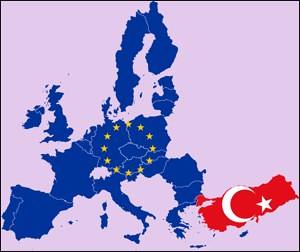
Turkey from West to East

Is Turkey part of Europe? This question was at the back of my mind during a week-long visit to Istanbul over the Eastern break. Far from being an academic geographical consideration, the question has big implications for both the future of Turkey and the European Union. At least, that's what were told.

Turkey is a candidate country to join the EU, having started accession talks in 2005. Most of the countries of continental Europe are against Turkey joining, particularly France. But the UK, backed by the United States, is forcefully pushing for Turkey's membership in the union. Nicolas Sarkozy insists that Turkey is not geographically or culturally part of Europe and does not belong in the EU. David Cameron says that it is Islamophobia that is keeping Turkey out, and that the EU should not be an 'all-Christian club'. The argument for accession stresses that Turkey's largest city as well as 3% of its territory is in Europe, and that historically Turkey (as the Ottoman Empire) ruled over many countries now in the EU including Greece, Cyprus, Bulgaria, Romania and Hungary.

Wednesday, 27 April 2011

Berlusconi and Sarkozy slam on the brakes

Usually it's the Northern European countries that are the ones clammoring for rollbacks on EU integration. But in a strange twist this week it's the reliable core stalwarts of France and Italy that are agitating for a step back in the EU integration project. The leaders of the two countries sent a letter to the European Commission yesterday asking for the ability to re-establish border controls between Schengen states in 'exceptional circumstances'.

The letter was sent after Nicolas Sarkozy and Silvio Berlusconi held a summit in Rome yesterday trying to diffuse the diplomatic crisis between the two countries. Italy has demanded help from its EU neighbours, saying that it can't handle the influx of economic refugees floating across the Mediterranean to escape the chaos in North Africa and landing on Italian shores.

Deciding that the EU wasn't acting fast enough to provide assistance, Silvio Berlusconi's government started issuing the migrants with "temporary residence visas" and telling them they could use them to seek work in other EU states, knowing full well that the French-speaking Tunisians and West Africans would go to France. The French were furious, and started stopping trains at the French-Italian border which they suspected of carrying the migrants. Each side is accusing the other of violating the EU's Schengen agreement, which allows passport-free travel between member states.

Wednesday, 20 April 2011

Koran burning: US and Europe have different ideas on free speech

The US military is still struggling to quell violence across Afghanistan and elsewhere caused by a Florida pastor's public burning of the Koran. The burning, which took place on 20 March, came months after the same pastor had decided to cancel his first planned book-burning after everyone from senior US military figures to President Obama told him not to do it. They said such a burning would incite violence across the Arab world and put US troops in danger.

In the end, he went ahead and did it anyway. So far at least one US military death is thought to be linked to the protests sparked by the Koran burning, but of course this is difficult to prove directly But throughout all of the warning issued to the pastor by the US military and politicians in the run-up to the burning everyone was keen to stress one thing – though the burning would put the lives of US troops at risk, the pastor had every legal right to burn the Koran under the freedom of speech entitled to him by the first amendment of the US constitution. So, the pastor faces no legal consequence for the Koran-burning he staged. And he is now planning more burnings starting on Good Friday in Michigan.

Contrast this to how a similar incident was handled across the pond in the UK. A man staged a public burning of the Koran at a shopping centre in Carlisle on 19 January. He was arrested, and yesterday a judge sentenced the man to 70 days in jail for religiously aggravated harassment. The judge called his stunt "theatrical bigotry".