Friday, 25 June 2010

The snark heard round the world

It’s a strange turn of events when some snarky personal attacks made in Rolling Stone magazine can have an explosive worldwide effect that will change the course of history. But that is what has unfolded this week as Barack Obama has been forced to fire the top US general in Afghanistan, Stanley McChrystal, after he and his top aides made inflammatory remarks about the president and vice president to a reporter from the music magazine. Astonishingly, the general and those around him personally insulted Obama, who is the commander-in-chief of the armed forces, and cast doubt on the whole mission in Afghanistan. The trash-talking included calling Vice President Joe Biden 'vice president bite me'. 

It was the worst possible timing, coming at a time of increasing violence in Afghanistan when NATO forces appear increasingly bogged down there. Relations between NATO and Afghan president Hamid Karzai are at an all-time low following the almost surely rigged elections that kept him in power. The original mission to root out Al Qaeda has nothing to do with the current situation now that the terrorist organisation has moved its base to Pakistan, so the war has largely become focused on nation-building. The conflict recently became the longest war in US history, a grim milestone. This month has been the deadliest for NATO soldiers since the war began almost nine years ago.

Monday, 21 June 2010

Flemish nationalists win big in Belgium

I’m back in cold, rainy Belgium, which is truly painful after a week in the warm sunshine. I spent this past weekend in the muddy, rain-soaked fields south of Waterloo, attending a reenactment of the decisive battle 200 years ago that spelled the final defeat for Napoleon. Despite the rain it was quite an experience (check out the video I shot below). I was particularly impressed with the international diversity of the people there, - both of the spectators and the 3,000 people participating in the battle. Most significantly, I noted that there seemed to be an even mix of Flemings and Walloons who had come to watch the battle. The harmony on the battlefield seemed a contrast to the battle going on at the moment between the country’s politicians.

The country went to the polls last Sunday to vote for a new government, and as predicted the result was inconclusive. But surprisingly, the election delivered more certainty than had been expected. There was a clear winner in both French-speaking Wallonia and Dutch-speaking Flanders. There was a large (though not surprising) victory for the Socialists in Wallonia, and a shock victory for the New Flemish Alliance (N-VA), a nationalist party, in Flanders. Because the parties did so well in each of their regions, there is now a realistic prospect that the two could form a coalition by September, with the Socialist MP Elio di Rupo to be appointed prime minister. Significantly, he would become Belgium’s first Wallonian prime minister in decades.

Friday, 18 June 2010

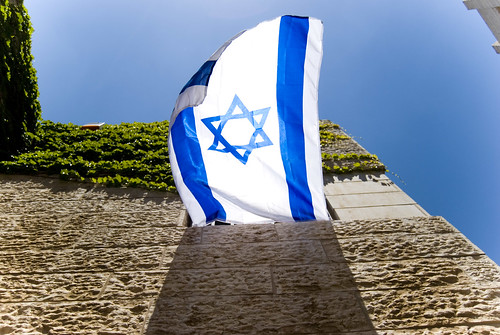
Diversions and divisions in Israel

I’ve never received such a shock from reaching into my pocket. Having just emerged from a relaxing float in the Dead Sea, I had snapped a few photos before starting to make my way to my rental car to continue my journey through the desert. But when I reached into my bathing suit pocket to get my car keys my eyes just about popped out of my skull when I realized what I had done. I had left my keys in my pocket while floating on the surface of the dark, murky water. I rushed back to where I had been floating but I knew it was no use – it was impossible to see into the water, and impossible to feel anything at the rocky bottom. I was stranded in the middle of the desert, locked out of my car with only my camera and my wallet.

I had actually just begun my journey through the Dead Sea area, having rented a car in Tel Aviv and driven down intending to visit the ancient fortress of Masada, the Ein Gedi nature preserve and the main Dead Sea spa. I was driving through the West Bank when I reached the sea, and as soon as I saw it I couldn’t contain my excitement. I parked the car at the first spot I could enter the water and rushed in with reckless abandon. So when I realized my horrible error I was literally in the middle of nowhere, with no phone for miles, in the middle of the disputed West Bank territory, in searing 40 degree weather. It was not a good situation!

Tuesday, 8 June 2010

Israel: in concept and in reality

As Israel’s raid of a protest ship trying to break the blockade of Gaza unfolded last week, it was interesting to watch how the coverage differed between the United States and Europe. Monday morning I watched as the European headlines scrolled across my RSS feed reader, and then starting at about 13:00 I saw the headlines come in from the main US media outlets. It was as if they were reporting on two different events. The difference in media coverage has been particularly interesting to watch as I am about to head to Israel tomorrow to see the situation for myself.

It wasn’t so much surprising as it was illustrative. During my four years living in Europe I’ve seen firsthand how different the European media’s coverage of the Israeli-Palestinian conflict is from the American media’s portrayal. They’re two sides of a coin, and the truth is probably somewhere in the middle. It’s rare to see any criticism of Israel in American media or from American politicians, whether from the left or from the right. The main emphasis is usually on the Israeli need for security. In Europe, the main emphasis tends to be on the occupation, and the security concerns of Israel aren’t addressed as frequently.

Monday, 7 June 2010

Belgian elections - the EU fiasco around the corner

Belgians will go to the polls this Saturday to vote for a new government, just two weeks before the country is slated to take over the rotating EU presidency from Spain. Considering that it took Belgium nine months to form a government after the last general election in 2007, Brussels is getting increasingly worried about a potential leadership vacuum in the council after 1 July.

The difficulty, as with everything in Belgium, is over language. The Belgian government collapsed in April over a disagreement between French- and Dutch-speaking parties over whether an electoral district on the outskirts of Brussels should be part of the Brussels Capital Region or Flanders. It may sounds like an innocuous issue but it goes to the heart of the language conflict, as explained in this previous blog entry.

Wednesday, 2 June 2010

The European left: an endangered species?

At the moment, Europe is a conservative-dominated continent. The anecdotal evidence that Europeans have been veering to the right at this time of economic crisis has been evident for some time, especially in last year’s European Parliament elections where voters handed a strong majority to the conservative EPP. But the string of centre-right victories over the past few months has demonstrated clearly that the European public is gravitating toward conservative ideologies as their own economic situations become more uncertain. And looking at the geographic location of the few centre-left governments left in Europe, once can see that Europe’s Social Democrats are really in trouble.

This weekend Czechs went to the polls to select a new government. They faced a stark choice between the centre-left Social Democrats who promised during the campaign to increase spending and social benefits, and the centre-right Civic Democratic Party (ODS) who pledged to make drastic budget cuts and reduce the deficit. It is a battle economists have been waging as well. As most countries emerge from recession, is it better to maintain state spending to fuel the recovery or to make drastic cuts to tackle the large deficits and public debt?