Wednesday, 13 July 2011

Eurozone in panic: Is Italy next domino to fall?

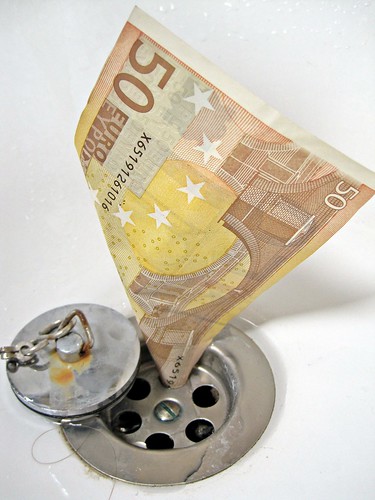
The Eurozone is looking at several doomsday scenarios this week after Italy emerged as the latest EU state to face serious and sudden attack by international bond and security markets. After a very public spat between Prime Minister Silvio Berlusconi and his finance minister, and with the continued political uncertainty over Berlusconi's position, the markets have decided Italy may not be safe to lend to any longer.

With the paralysis in the country's government likely to prevent decisive action to confront the crisis, some are saying Italy is perhaps days away from becoming an economic failed state. And unfortunately it is not too big to fail, but it is too big for the EU to bail out.

Such extreme rhetoric may or may not be justified, depending on who you talk to. But the risk is extreme. The countries that have so far fallen victim to the debt crisis and required an EU bailout – Portugal, Ireland and Greece – are relatively tiny and their debt makes up less than 5% of overall eurozone public debt. If worse came to worse, France and Germany could afford to buy back all of their debt combined.

Friday, 8 July 2011

Is Murdoch's influence in British politics coming to an end?

The News of the World phone hacking scandal in the UK has literally exploded this week, with fresh allegations that the Rupert Murdoch-owned paper hacked into the phones of murder victims, victims of the 7/7 terrorism attacks, relatives of dead soldiers and detectives investigating cases. Late yesterday it was announced that the 160-year-old paper will shut down as a result of the scandal, news that sent shock waves through Britain.

The allegations of bribing police officials and hacking into phones began several years ago, but the latest revelations are so distasteful that it seems to have given British politicians the resolve to publicly denounce Murdoch, something they never dared to do before. At the centre of the scandal is Rebekah Brooks, who was editor of News of the World at the time of the phone hacking but has since risen to become chief executive of Rupert Murdoch's global media empire News Corp. The company, which also owns Fox News and papers such as the New York Post in the US, controls a vast array of British tabloid papers and has long been known in the UK as a political power broker. Murdoch controls British politics, it is claimed, by threatening to use his papers to destroy any politician that doesn't give in to his demands.

But Murdopch's influence over British politics seemed to come to a climactic end this week, as one after another members of the British Parliament took to the floor and denounced not only News Corp, but also the fact that the parliament for so long has been bullied by the company. Conservative MP Zac Goldsmith said News Corp has "systematically corrupted the police and in my view has gelded this Parliament, to our shame.” Labour MP Chris Bryant said the hacking was symptomatic of the way News Corp operates around the world.
Thursday, 7 July 2011

Poland fires warning shot over Denmark's 'nationalist' moves

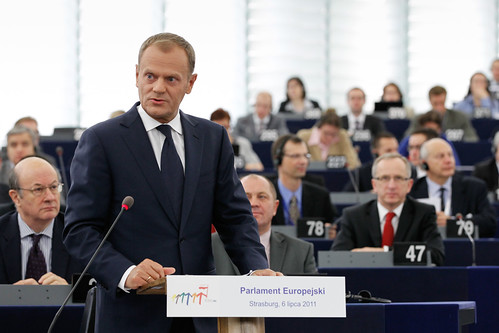
Poland is not usually known as a very pro-EU country. In fact, it has gotten the reputation as the most Eurosceptic of the new member states. But yesterday Polish Prime Minister Donald Tusk lambasted recent moves by Denmark, France and Italy to undermine the European project. He signalled he intends to halt the current slide, led by those Western countries, toward reintroducing border controls at internal EU borders.

Tusk was speaking to the European Parliament in Strasbourg to mark the start of Poland's presidency of the EU, which will last the next six months. "The answer to the crisis is more Europe," he said, not less. He indicated that he will fight against efforts to further erode EU principles, and suggested he was unhappy with the deal reached among member states last month to allow temporary internal border patrols to deal with increased immigration.
"I am against any barriers to internal free movement under the pretext of dealing with migration problems. What Denmark is doing is a concern for anybody who thinks that free movement is going to be restricted even further," he told the parliament. "Europe, with its institutions, its budget and its objectives, is not the source of this crisis. And following those who say the opposite would be a fatal mistake. Undoing the European construction at this time and turning to nationalism as an answer to the crisis would be a very big mistake."
It was a fairly unusual move for the incoming presidency to take such a political stance against what other member states are doing, because the presidency is supposed to be a neutral negotiator in the council. But Poland has always marched to the beat of its own drummer when it comes to the EU.

Wednesday, 6 July 2011

EU sets goal to abolish roaming charges by 2015

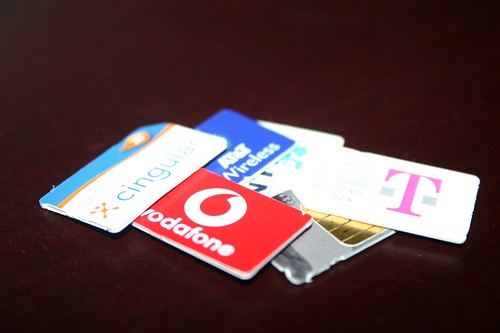
European consumers will soon have the option to choose a separate mobile carrier for when they are in other EU countries, under a proposal put forward by the European Commission today. The goal is to stimulate competition in the market to make the phone companies stop charging the exorbitant rates for voice and data with which they sometimes make up to 99% profit.

The move is just the latest in a long-running battle between the mobile operators and the EU, but this is the most aggressive move yet. It is also an acknowledgement that the caps the EU set in 2007 and then extended in 2009 have not been successful in fixing the dysfunct in the market. Those caps lowered roaming rates to 45 eurocents (c) per minute within the EU. Previously the rate had been, on average, around 2 euros per minute.

Under the new plan, from July 2014 operators will be forced to open their networks to upstart competitors who can offer customers cut rate charges for roaming. They will also have to allow their customers to sign up to a seperate carrier for roaming if they so choose. The customer's phone would automatically switch to the other carrier when they go abroad, but they would keep the same number and sim card. They would then receive a separate bill from their 'roaming carrier'. Before it becomes law, the proposal must first be approved by the European Parliament and member states.

The new plan is intended as a long-term fix that will permanently alter the market. The commission hopes it will lead to a situation by the end of 2015 where the caps are no longer necessary. because healthy competition has made the large carriers offer their customers roaming rates that are the same as domestic rates. Opening the networks will also provide incentives for large mobile companies to operate across the EU. The long-term objective is to get to a situation where there is no longer 'roaming' within the EU, in the same way that there is no roaming charge when you go to a different state in the US (though when mobile phones first came out, there were such roaming charges within the US. Competition within the market eventually made those go away).

Tuesday, 5 July 2011

Tory Euro-MPs defy Cameron on climate change

British Conservatives in the European Parliament rebelled against the climate change policy of their party leader today and cast the deciding votes against a resolution calling for the EU to increase its commitment to reduce greenhouse gas emissions by 2020.

By a margin of ten votes, the parliament voted today to remove the call for the EU to up its commitment in UN negotiations from 20% to 30% from a resolution, prompting the resolution's collapse. Conservative British Prime Minister David Cameron could have swung the vote the other way if he had been able to convince even just a few of his 26 euro-MPs to support the call for 30%. But he was unable to do so, despite considerable effort. Cameron has made action on climate policy a cornerstone of his political platform and he took the lead among EU leaders in calling for the increased commitment.

Last week Cameron sent his energy minister to Brussels to tell the euro-MPs to vote for the measure, but they refused. It's an uncomfortable setback for the British leader and an indication of just how little control he has over his rebellious motley crew in Brussels. They are, as one London-based Tory told me, "completely beyond London's control". The political wild west in which Tory euro-MPs operate has caused problems for Cameron in the past, particularly when their actions seem to clash with the progressive social agenda Cameron has adopted in order to bring the party back into the British mainstream. He has been criticised in the past for allowing Tory euro-MPs to vote against pro gay rights resolutions in the European Parliament.

But the British Conservatives weren't the only ones bucking their party leadership on this issue. The centre-right leaders of Germany and France have also called for the EU to raise its commitment to 30%. But Merkel and Sarkozy's party members in Brussels also defied their party leaders' positions and voted with the centre-right grouping in the parliament to block the resolution. The seeming incongruity will be an awkward reality for those leaders as well. But neither of them have made the environment such a core issue of their political appeal like David Cameron has. And he is being heavily criticised by the left-leaning British press today as a result.

Monday, 4 July 2011

France rocked by new twist in DSK case

Revelations last week challenging the credibility of the New York chambermaid who says she was raped by former IMF chief Dominique Strauss-Kahn have triggered a whirlwind of speculation, recrimination, and of course good old-fashioned America-bashing in France.

Even before the revelations on Friday and DSK's subsequent release from house arrest, there was already widespread doubt in France that he was guilty. Polling indicated that 57% of French people thought DSK, who was until his arrest the leading contender to challenge Nicolas Sarkozy in next year's presidential election, was set up. The French media was scandalised by the US media's coverage of the case, which they said seemed to be presuming DSK's guilt. They were particularly outraged by the so-called 'perp walk' of a handcuffed DSK in front of the news cameras, something that is illegal to show in France if someone has not been convicted of a crime.

The case against DSK now looks almost certain to be dropped after it emerged that the woman has allegedly worked as a prostitute in the past. It also came to light that she had changed her story to investigators. Rather than reporting the incident to the hotel right away, she actually cleaned another room after the alleged attack and then went back to Strauss-Kahn's room to finish cleaning it.